Same-Day Shipping vs. Same-Day Delivery: Cutoffs, Costs, and What to Expect
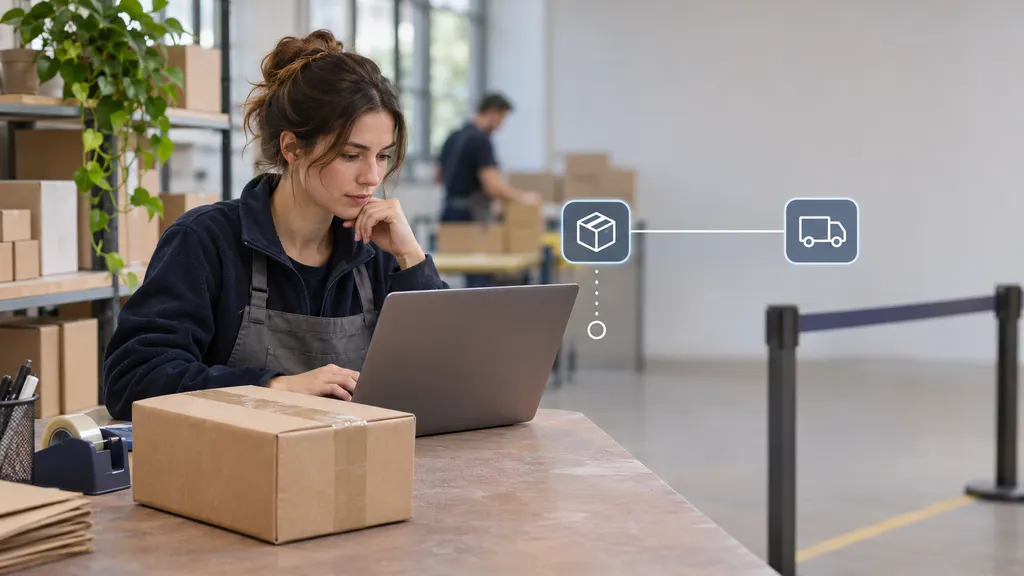
Same-day shipping means an order is prepared and handed to a carrier or delivery provider on the day it is placed; same-day delivery means the customer receives it that day. The difference matters because an order can ship today and arrive tomorrow or later. Before paying for either option, check the order cutoff, your address’s eligibility, the promised arrival date, and what the seller means by “shipped.”
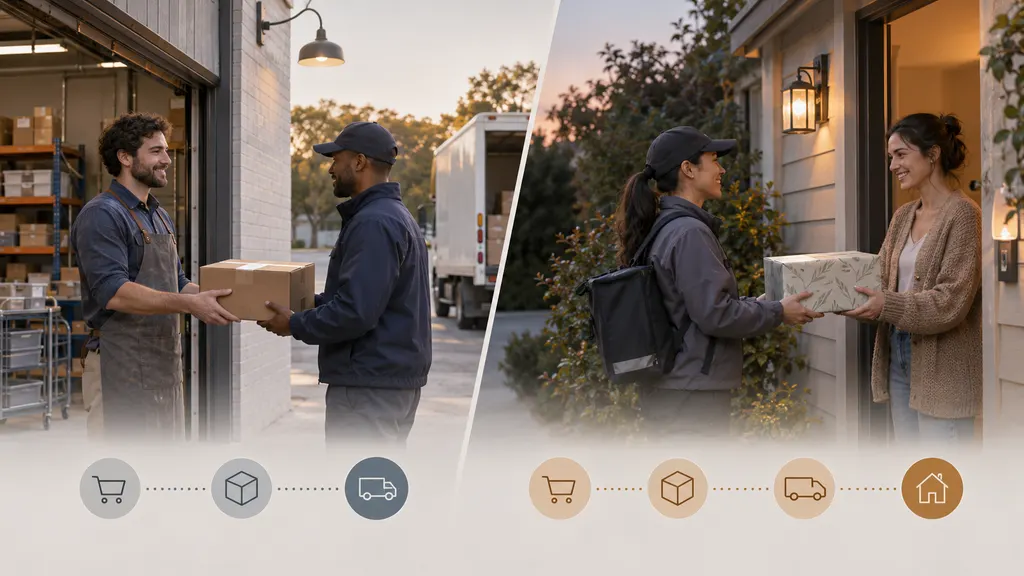
For ecommerce merchants, the distinction is just as important: a fast warehouse dispatch process does not, by itself, create a same-day delivery service. The customer-facing promise must account for inventory location, processing time, carrier pickup or courier availability, and the time left to complete delivery.
What each promise actually covers
Same-day shipping usually describes when the merchant processes and dispatches an eligible order. In practice, sellers may use “shipped” to mean a label was created, a parcel left the warehouse, or a carrier accepted it. Those events are not interchangeable. A label may be printed before the parcel is physically transferred, and the first tracking scan may appear later than the handoff. Look for the seller’s stated definition rather than assuming that “shipped today” means “arriving today.”
Same-day delivery describes the arrival commitment: an eligible order placed within the applicable window is delivered on the same calendar day. It requires both fast order preparation and a delivery operation capable of reaching the destination before that day ends. Availability is often tied to a particular address, product, fulfillment location, and checkout time. A service advertised on a storefront may not be available for every item in the cart.
| Question | Same-day shipping | Same-day delivery |
|---|---|---|
| What happens today? | The order is dispatched or handed off, subject to the seller’s definition. | The order reaches the customer, subject to the stated delivery terms. |
| Does it promise arrival today? | No. | Yes, for an eligible order placed before the applicable cutoff. |
| What usually limits availability? | Order-processing time, inventory, warehouse hours, and pickup schedules. | Those factors plus delivery capacity, service area, travel time, and the arrival window. |
| What should a buyer verify? | The dispatch deadline and estimated delivery date. | Address eligibility, order deadline, total fee, and promised arrival window. |
Neither term should be confused with a carrier’s overnight or next-day service. Those services concern arrival on a following day under their own terms. For example, USPS describes Priority Mail Express as an expedited service with its own delivery commitments, not a general promise that a parcel ordered today will arrive today. The service selected at checkout and the merchant’s order-processing deadline both matter.
Why the cutoff matters more than the label
A cutoff is the latest time an eligible order can be placed to qualify for a particular promise. A merchant might have separate deadlines for same-day dispatch and same-day arrival. The latter generally needs to leave enough time for picking, packing, handoff, transit, and delivery. The deadline may also vary by destination, product, fulfillment location, day of the week, or available delivery capacity. No universal cutoff applies across sellers.
Suppose a customer places an order shortly before a warehouse stops processing orders. The seller may still be able to pack it and send it out that day, but there may be too little time for delivery before evening. Conversely, a customer near an eligible store or fulfillment center might qualify for same-day delivery if the item is in stock locally and a delivery slot remains open. The relevant question is not simply “How fast is the carrier?” It is whether the entire sequence can be completed before the promised arrival window.
Time zones can create another misunderstanding. A displayed cutoff may refer to the seller’s warehouse time, the destination’s local time, or the time shown at checkout. If that is unclear, the checkout confirmation or the seller’s service terms should take precedence over a generic banner. Orders placed on a weekend or holiday can also follow different processing rules; a “same-day shipping” claim should not be assumed to apply every day.
For merchants, a useful internal test is to work backward from the latest acceptable delivery time. Subtract the time required for the final delivery leg, provider handoff, packing, and order review. Then leave a practical buffer for payment checks, inventory discrepancies, or capacity changes. The resulting customer cutoff is more defensible than a deadline based only on the warehouse’s closing time.
What drives the cost?
There is no reliable universal price difference between same-day shipping and same-day delivery. Sellers may include one service in an order threshold, charge a separate fee, or vary the price by location and order contents. The meaningful comparison is the total charge displayed for the specific order alongside the promised arrival time.
Same-day shipping can increase a merchant’s operating costs even when the customer sees no separate charge. Orders may need to be picked and packed sooner, inventory must be available at the right location, and the parcel has to be ready for a scheduled pickup or drop-off. Yet dispatching today does not necessarily require a special delivery network; the parcel may still travel through a standard service.
Same-day delivery adds a tighter geographic and timing constraint. The item must be positioned close enough to the buyer, and a courier or other eligible delivery service must have capacity to complete the trip that day. Distance, delivery density, basket size, peak demand, and the amount of time left in the day can affect whether the service is offered and what it costs. These are cost drivers, not a formula for predicting a particular checkout fee.
Buyers should also check whether a faster option changes only the dispatch date or the arrival date. Paying extra for an order to leave the warehouse today may not be worthwhile if the displayed delivery estimate is unchanged. A clear checkout should show the option’s fee and expected arrival before payment, rather than relying on a speed-related label alone.
What to expect after placing an order
The order confirmation should state the selected service and any estimated or promised arrival window. After that, the sequence may include order acceptance, picking and packing, label creation, handoff, transit, an out-for-delivery event, and delivery. Not every provider displays every stage, and tracking updates do not always appear immediately. A “label created” update is evidence that shipping information was generated; it is not proof that the parcel has been collected or that it will arrive that day.
If an order promises same-day delivery, check the promised window against the status shown in the merchant’s order page or delivery messages. If the window passes without delivery, contact the seller using the order number and the terms shown at checkout. The seller owns the customer-facing promise and can clarify whether the order remains in transit, whether a delivery attempt occurred, and what remedy its policy provides. Tracking can help explain what happened, but it cannot make a missed delivery window on time.
For a same-day shipping order, the first useful question is whether the seller met its dispatch commitment, not whether the parcel arrived that evening. A delayed tracking scan alone may not settle that question. If timing is consequential, ask the seller whether the parcel was actually handed over and what delivery date applies to the service purchased.
How merchants can make a faster promise without confusing customers
Start with the outcome customers care about: when the order is expected to arrive. If a storefront offers same-day shipping, pair the dispatch claim with an estimated arrival date or window. If it offers same-day delivery, check eligibility using the customer’s address and the actual items in the cart before presenting the option as available.
- Define the milestone. State whether “ships today” means packed, transferred to a delivery provider, or accepted by the carrier. Use the same definition in checkout, confirmation emails, and support guidance.
- Connect inventory to the promise. An item available elsewhere in the network may not be close enough for same-day arrival. Mixed carts can require different handling from single-item orders.
- Set cutoffs by service area. Build in time for order processing and the delivery provider’s last feasible handoff or collection.
- Show the complete offer. Display the delivery date or window, applicable fee, and any material eligibility conditions before the customer pays.
- Prepare for exceptions. Establish how support teams will handle an unavailable item, a missed handoff, an unsuccessful delivery attempt, or an arrival after the stated window.
In the United States, merchants should also distinguish a delivery estimate from a firm shipping promise in their customer communications. The Federal Trade Commission’s Mail, Internet, or Telephone Order Merchandise Rule addresses shipping representations and what sellers must do when they cannot ship within the applicable promised time. It does not turn every “same-day shipping” claim into a same-day arrival guarantee, but it is a reason to make dispatch claims precise and to review the applicable requirements rather than treating cutoff language as marketing copy.
The practical choice is straightforward. Offer same-day shipping when you can reliably get eligible orders out that day and explain when they are expected to arrive. Offer same-day delivery only where inventory, processing, and local delivery capacity can support an arrival promise for the specific order. For customers, choose between the two based on the arrival information at checkout, not the shared words “same day.”
FAQ
If my order ships today, will it arrive today?
Not necessarily. Same-day shipping concerns dispatch or handoff. Arrival depends on the delivery service, destination, and estimated date shown for your order. Look for an explicit same-day delivery option if arrival today is required.
Does creating a shipping label count as shipping?
A label shows that shipment information has been prepared, but it does not by itself confirm that the parcel has been handed to a carrier. Sellers may define their dispatch milestone differently, so check the stated terms or ask for clarification if the handoff time matters.
Why is same-day delivery unavailable for an item advertised on the site?
The item may not be stocked close enough to your address, your order may be past the cutoff, or delivery capacity may no longer be available. Availability should be checked for the specific cart and destination at checkout.
Is same-day delivery the same as overnight shipping?
No. Same-day delivery means arrival on the day the order is placed, subject to the offer’s conditions. Overnight or next-day shipping generally targets a following-day arrival under the selected service’s terms.
What should I do if a same-day order misses its promised window?
Save the checkout confirmation and contact the seller with your order number. Ask which commitment applied, whether the parcel was dispatched or a delivery attempt was made, and what the seller’s policy provides for a missed promise.
Sources
- Federal Trade Commission, “Selling on the Internet: Prompt Delivery Rules”. Guidance on shipping representations and delays for covered U.S. sellers.
- USPS, “Priority Mail Express”. Official description of an expedited shipping service and its delivery terms.
- FedEx, “SameDay”. An example of a carrier service specifically oriented toward same-day delivery, distinct from a merchant’s same-day dispatch claim.